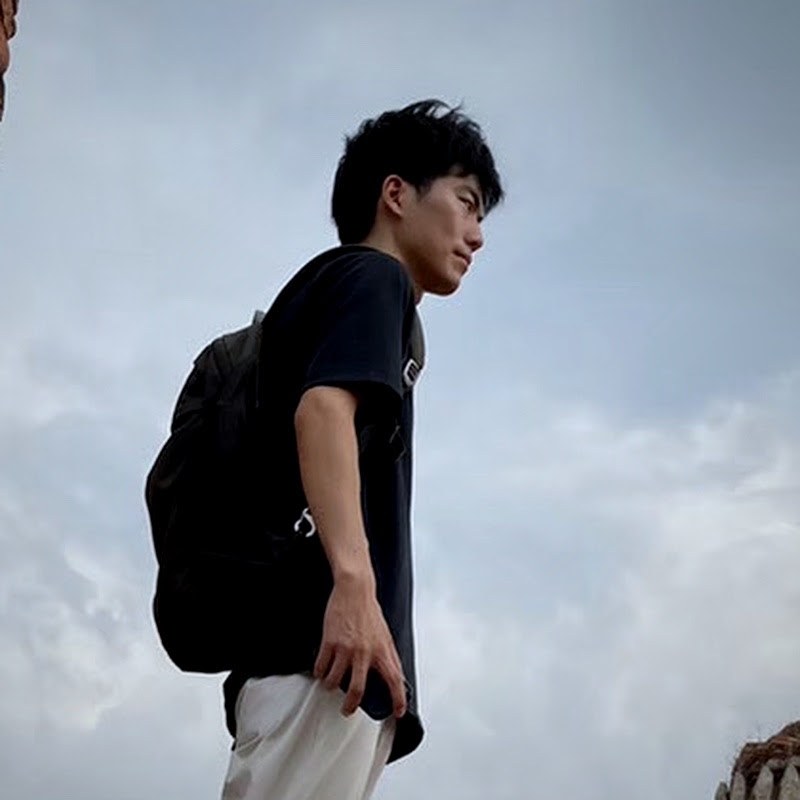
Profile
I'm Molly, a traveling podcaster, and I run two activities: "HOBISAYA" and "RANTAU."
"HOBISAYA" is an activity that questions the values we take for granted and, by presenting a different way of seeing things, explores ways of thinking for stepping off other people's yardsticks and living by your own choices.
"RANTAU" is an activity that aims to serve as a catalyst: by visiting places around the world and sharing the lives and cultures of the people there just as they are, it seeks to loosen the fixed assumptions of those who watch.
Career
- 1994
- Born in Japan
- 2000
- Attended a Japanese school in Taiwan
- 2006
- Discovered cars and aspired to become a car designer
- 2014
- Entered the Department of Design, Faculty of Engineering, Chiba University
- 2016
- Transferred to the Department of Basic Design, College of Art and Design, Musashino Art University
- 2018
- Started working as a freelance designer (design firm eau → design guild NEWPLAIN)
- 2019
- Exhibited at the Stockholm Furniture Fair, one of the world's three great furniture fairs
- 2023
- Grand Prix at the 60th Senden Kaigi Award, Japan's national advertising copy award
- 2023
- Launched language-learning channels on YouTube
- 2024
- First visits to Cebu and Vietnam
- 2025
- First visits to Malaysia and Bali
- 2026
- First visit to Cambodia
- 2026
- Named the philosophy activity “HOBISAYA” and the travel activity “RANTAU”
I run two projects: RANTAU, which shares the world as it is, and HOBISAYA, which questions the values we take for granted.
RANTAU
An activity of turning one’s eyes to the world — though it is not tourism. It delivers the world’s diverse values as they are, without judgment and without selling emotion, together with the morning sounds of a place, the smells of its markets, and the lives of its people — as real and unadorned as possible. It is an attempt to prime a small wavering in the viewer’s own sense of what is “normal.”
Cities Visited
Click a blue dot to open the playlist for that place.
Support RANTAU
This is not support in exchange for something — it is support for the activity itself. It helps me keep traveling to more countries and sharing the world as it is. I believe that, gathered little by little, this helps reduce prejudice in the world. Everything I publish will remain free and open. As a thank-you, I also post members-only videos from time to time.
Support via YouTube membership →HOBISAYA
HOBISAYA is a talk podcast that questions the values so prevalent in human relationships and society, presenting its own way of seeing things to explore new possibilities.

How it flows: daily raw logs on stand.fm, a daily digest on YouTube, a weekly roundup in the newsletter, theory collections on Spotify, theory collections on note — and once enough theories gather, they become the book HOBISAYA.
Support HOBISAYA
This is not support in exchange for something — it is support for the activity itself. The podcast and videos will remain free and open. As a thank-you, members also receive early announcements of new books and early access to manuscripts.
Support through membership →You can also support via YouTube membership →
Books
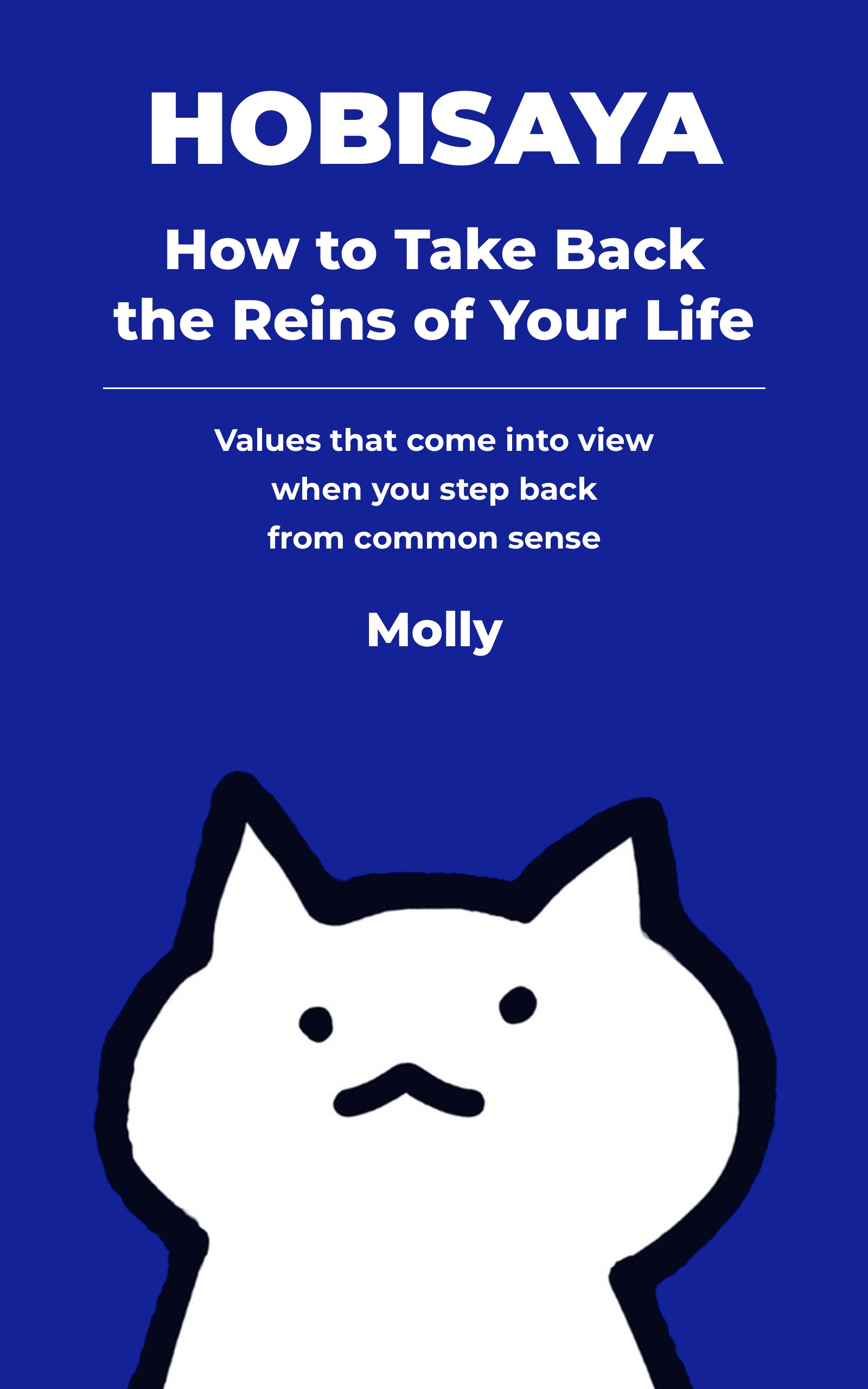
HOBISAYA — How to Take Back the Reins of Your Life
Are you tired of forcing everything into black and white? Drawn from the Japanese podcast HOBISAYA, this book distills more than five hundred episodes into ten short chapters: why "being smart" is an illusion, when to reset a relationship instead of struggling with it, why being torn between freelancing and a job is itself the answer, how the four quadrants of "love it" and "it pays" really move, why spirituality and logic are saying the same thing, why fewer choices make you happier — and why, in the age of AI, the key is being ready to hand it all over. One thread runs through every chapter: taking back the reins of your life. This is the English edition of the Japanese book HOBISAYA — practical, unsentimental ideas from someone who actually lives by them.
Find it on Amazon →Strengths and Weaknesses Are an Illusion
Strengths and weaknesses are not separate things — they are the same trait. Change the place, the era, or who is looking, and what was called a weakness can become a strength, and a strength a weakness.
Two Kinds of Thinking
"Thinking" comes in two kinds: "Thinking A," which grows stronger inside fixed rules, and "Thinking B," which questions the rules themselves and creates new ones. Lumping both into the single word "smart" makes people talk past each other. Separate them into A and B first, and the conversation gains resolution.
Communication Is a Force
Communication is a power like "the Force." Because it lets you manipulate others with ease, it can at times turn dark.
The World Is "Make-Believe"
"Presidents" and "managers" are only roles people have taken on. The world is built on a layer of make-believe, where everyone plays their part. Face the plain human being behind the role, and the fear of titles melts away.
There Is No Such Thing as Being "Smart"
"Smart" cannot be measured on a single scale. The power to memorise, to apply, to read a situation — abilities exist separately, and the verdict changes with the ruler. The very concept of being "smart" is an illusion.
Peace Is Not Calm, but Balance
Peace is not the stillness of a world where everything has stopped. The world keeps moving, and if it stopped, it would end. Peace is the balance of many forces in motion, holding each other in check.
There Is a Place That Is Neither A nor B
The world loves to split things into "if not A, then B." But divisions like humanities versus sciences are only conveniences for running society — they are not the essence of things.
The Keep-Your-20% Rule
The 20% of your work you'd rather not do isn't something to eliminate — it's something to choose, deliberately, to keep. Get rid of the work you hate, and a new 20% will simply turn into the work you hate. That is exactly why the reins are in your hands when you choose which 20% to keep.
Speaking Topics
A list of topics I can speak on, for talk shows, podcast guest appearances, lectures, and co-writing or contributed pieces. Each topic is backed by actual episodes of the HOBISAYA podcast, drawn from an archive of more than 500 episodes.
Mindset & Ways of Thinking
- Don't force it into black and white — think in gray — A commentator's way of thinking: no hype, no snap judgments
- "Being smart" is an illusion — Break down what intelligence is, and what remains is habits and patterns of thought
- Choosing not to decide — yet — How to spot the moments when a quick decision isn't the right answer
Owning Your Life and Career
- How to take back the reins of your life — Stepping off other people's yardsticks and living by your own choices (the core of my book)
- "Love it" or "pays well"? Don't worry about it — The four quadrants of work are always shifting; why deliberately keeping a disliked 20% makes the whole thing work
- Freelance or a job? If you're torn, take the job — The reality of freelancing, and who it suits, from someone who went independent
- Fewer choices, more happiness — Minimal living and decision-making
Relationships & Communication
- Struggle with a relationship, or reset it — Taking stock of relationships and finding the right distance
- Communication styles — What counts as getting through to someone differs from person to person
- Don't write people off as "bad at reading" — How to speak and listen without blaming the other person when a message doesn't land
Philosophy & Spirituality × Logic
- Spirituality and logic are saying the same thing — What two apparent opposites actually point to
- Switching between intuition and analysis — Not either/or, but choosing by situation: a practical approach
AI & the One-Person Business
- In the age of AI, the key is the resolve to hand it all over — The time freed up by delegating work to AI, and the work that stays with the one who delegates
- Running a solo business with AI — Behind the scenes of running three YouTube channels, book production, and app development with AI
- Owning "a factory inside your computer" — In an age when trying things costs almost nothing, how far can one person build?
Travel & the World
- Solo travel through 12 countries, mainly in Southeast Asia — Techniques for traveling cheap, safe, and getting to know local people
- Travel that stays in local people's homes — A style of travel that goes to see everyday life, not tourist sights
- Working and earning while traveling — How a traveling podcaster records episodes and makes a living
Language Learning (the YellowPen Method)
- How to keep learning a language on your own — Start from how to read it, and you won't burn out
- Read Hangul by swapping in the alphabet; read Thai script by its system — The YellowPen method explained (books available)
- Languages are a hobby that widens your world, not just a tool for earning — Tips for sticking with it, from a language lover
Content Creation & Monetization
- Running YouTube toward 100,000 subscribers — Shorts-first growth and how I run three channels (YellowPen Korean: 80,000+ subscribers)
- Kindle publishing as another income stream — The full process of an individual publishing and selling a book
- The road to ¥180,000 a month in passive income — A blueprint combining podcast, YouTube, and books
Healthspan & Well-Being
- Habits for staying a guy who can still move — How to keep up yoga, meditation, and bodyweight training without strain
- Waking up to the sounds of the world's mornings — My own alarm app, and the sounds I recorded on the road
Achievements
-
2025
Published the book HOBISAYA
Published my first book, HOBISAYA, collecting the theories from the podcast — first in Japanese, then in English as “HOBISAYA — How to Take Back the Reins of Your Life”.
-
2024
Began traveling the world
Started a wandering life traveling the world, mainly around Southeast Asia. The number of countries visited has reached 12.
-
2023
Guest appearance at the kickoff event of the 61st Senden Kaigi Award (one of Japan's largest copywriting awards)
As the previous year's 60th Grand Prix winner, I appeared as an online guest and talked about winning the Grand Prix on my first entry. Event report on AdverTimes (in Japanese)
-
2023
Grand Prix winner interview in Senden Kaigi
My Grand Prix interview from the monthly magazine Senden Kaigi (a Japanese advertising trade magazine) — “So that in ten years I can say it changed my life” — republished online (AdverTimes / Senden Kaigi online). Interview article (in Japanese)
-
2023
Grand Prix at the 60th Senden Kaigi Award, Japan's national advertising copy award
Won the Grand Prix on my first entry, with copy written for Miura Industries: "'Why is there no hot water?!' 'Why would you expect there to be?'" A Grand Prix interview ran in the June 2023 issue of the monthly magazine Senden Kaigi. Interview on AdverTimes (in Japanese)
-
2023
Featured in Fast Company (US)
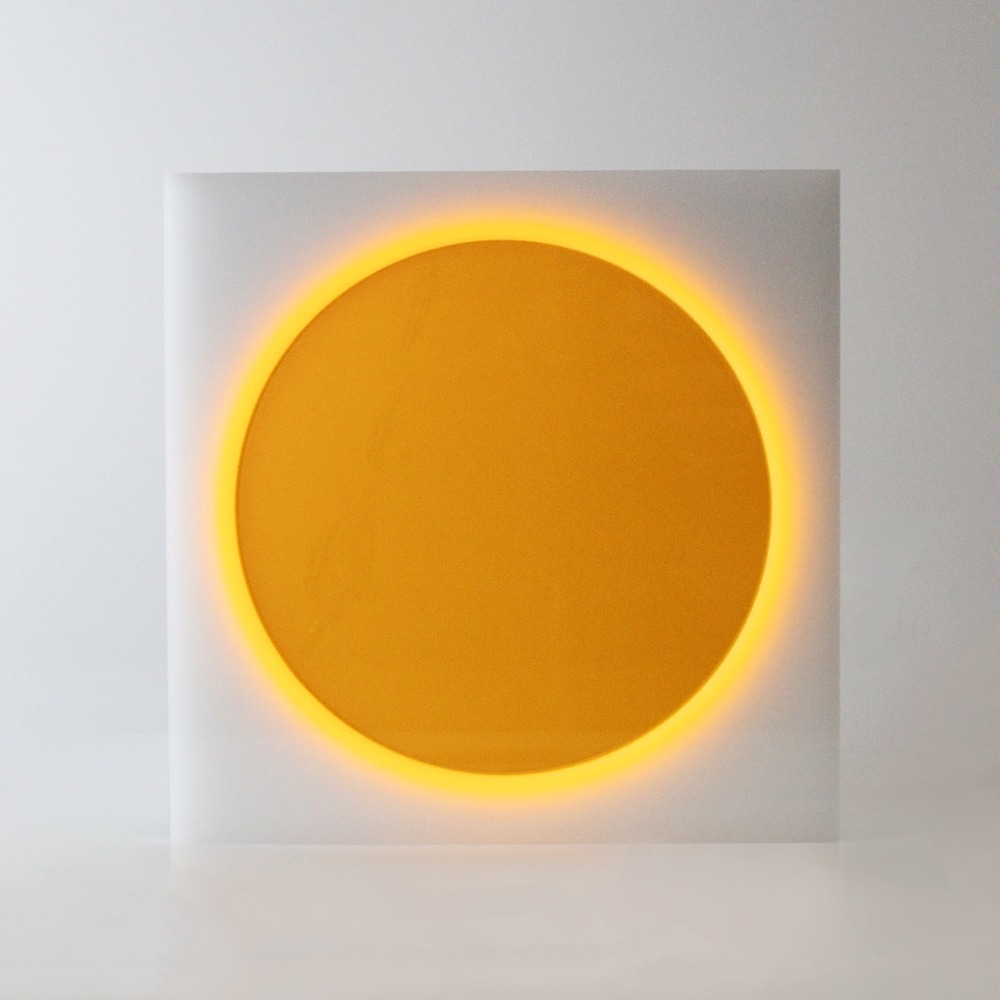
NISSHOKU ("solar eclipse"), a lamp that glows with sunlight and uses no electricity, was featured in the US design magazine Fast Company. I designed it in 2018, right after graduating from art university. Starting with designboom, it was also covered by media in Brazil, Russia, India, China, Canada, the UK, and more, and an Italian academic journal cited it as a case study in a scholarly paper (15 media placements confirmed). The Fast Company article
-
2023
"Let's Start by Talking About AI" — a talk in the "Watashino" column
A conversation on AI and welfare in the blog column of Homecare Tsuchiya, a home-visit care provider. I talked about how I use AI in my work. The interview (in Japanese)
-
2022
Gold Prize, 33rd MBC Radio CM Grand Prix (a radio commercial contest run by a broadcaster in Kagoshima, Japan)
Won the Gold Prize at this radio commercial grand prix.
-
2021–2022
Featured in “Kiara x Design,” an interview series with Kiara Inc.
I appeared as a designer in this interview series with the CEO of Kiara Inc. (a Japanese company). We discussed work styles, Data Driven design, design research at Mercari, blockchain, basic income, Web3, and more. The interview series page (in Japanese)
-
2019
Outstanding Performance Award, ADF Milano Salone Design Award
Hosted by the Aoyama Design Forum, on the theme "Portable Space." A folding lamp and the Scarf Chair (soft vinyl, origami-inspired) won the award and were featured in The Japan Times (April 28, 2019). The Japan Times article
-
2019
Exhibited at Stockholm Furniture & Light Fair “Greenhouse”
Exhibited the lighting piece “Jellyfish light” in Greenhouse, the young designers’ section of the Stockholm Furniture & Light Fair (February 2019), the furniture and lighting fair held in Stockholm, Sweden.Musashino Art University topics (in Japanese)
-
2017
Graduation Work Selected as an Outstanding Piece, Musashino Art University (one of Japan's leading art universities)
From the Department of Basic Design: "SCARF CHAIR" (vinyl; a chair that turns from a flat sheet into a three-dimensional form). Supervised by Professor Fumie Shibata. The university's selected works page (in Japanese)
Speaking & Appearance Inquiries
For talk shows, guest appearances on podcasts and radio, lectures, and co-writing or contributed pieces, please get in touch via the form. (I accept guest and speaking invitations only; I don't host or promote my own audience-gathering events.)
Speaking & Appearance Inquiry Form¥50,000 Consulting
I will join your company’s meetings with an observer’s eye, offering a perspective that helps you notice the biases hidden in what everyone takes for granted — the things that are hard to see from the inside.
- I join one meeting a month (online or in person — both are fine)
- You may list “Advisor: Molly” on your company’s website and social media. Photos of our meetings may also be taken and shared
- Everything you share with me is kept strictly confidential. That said, within a range that causes no issues, I may occasionally bring it up as a topic on my podcast
I accept only a small number of companies.
¥50,000 per month (tax included)
Depending on the content, I may not be able to accept.